

Cot Valley is Beautiful… and That’s the Problem
A Stormy Evening Photography Trip to Cot Valley
Not because there is nothing to photograph, but because there is almost too much.
Too Many Compositions
Cot Valley is full of possible images. At low tide, even more of the beach opens up, revealing rocks, pools, wet sand, textures and shapes that are not always accessible. Every few steps, something else catches your eye.
A line in the rock., a pool reflecting the sky, green moss against dark stone, a boulder catching the last of the evening light….
In theory, that sounds ideal. In practice, it makes the photography harder.
With the bigger coastal vistas, the subject is usually more obvious. You still have to work for the image, but the main shape of the photograph often presents itself quite quickly: sea, cliffs, horizon, light, foreground.
The smaller compositions are different. They demand more patience. They ask you to simplify. They force you to decide what to leave out.
That was the challenge for this evening.
I did not want to photograph everything. I wanted to find one or two quieter images that felt more deliberate.
A Hazy Start
When I first arrived, the evening had a soft, hazy feel to it. It was calm enough to start working slowly, and for a while it looked like the conditions might suit the kind of photography I had in mind.
Rather than rushing straight into the big view, I started looking closer at the rocks and the way the light was falling across them. There were pools and textures everywhere, with little pockets of reflection and shadow changing as the sky shifted above the valley.
This is the part of landscape photography that can be both rewarding and frustrating.
You are not waiting for a single dramatic moment. You are searching. Testing. Moving the tripod slightly. Looking again. Realising the first composition almost works, but not quite. Then finding another possibility two feet away.
It can feel slow, but that is the point.
The more I looked, the more I realised Cot Valley was giving me plenty of options. The problem was choosing the right one.
Then the Weather Changed
After about 45 minutes, the evening changed.
The haze began to give way to darker rain clouds, and the sky started to look far more unsettled. What had begun as a quiet low-tide photography session quickly became something moodier and more unpredictable.
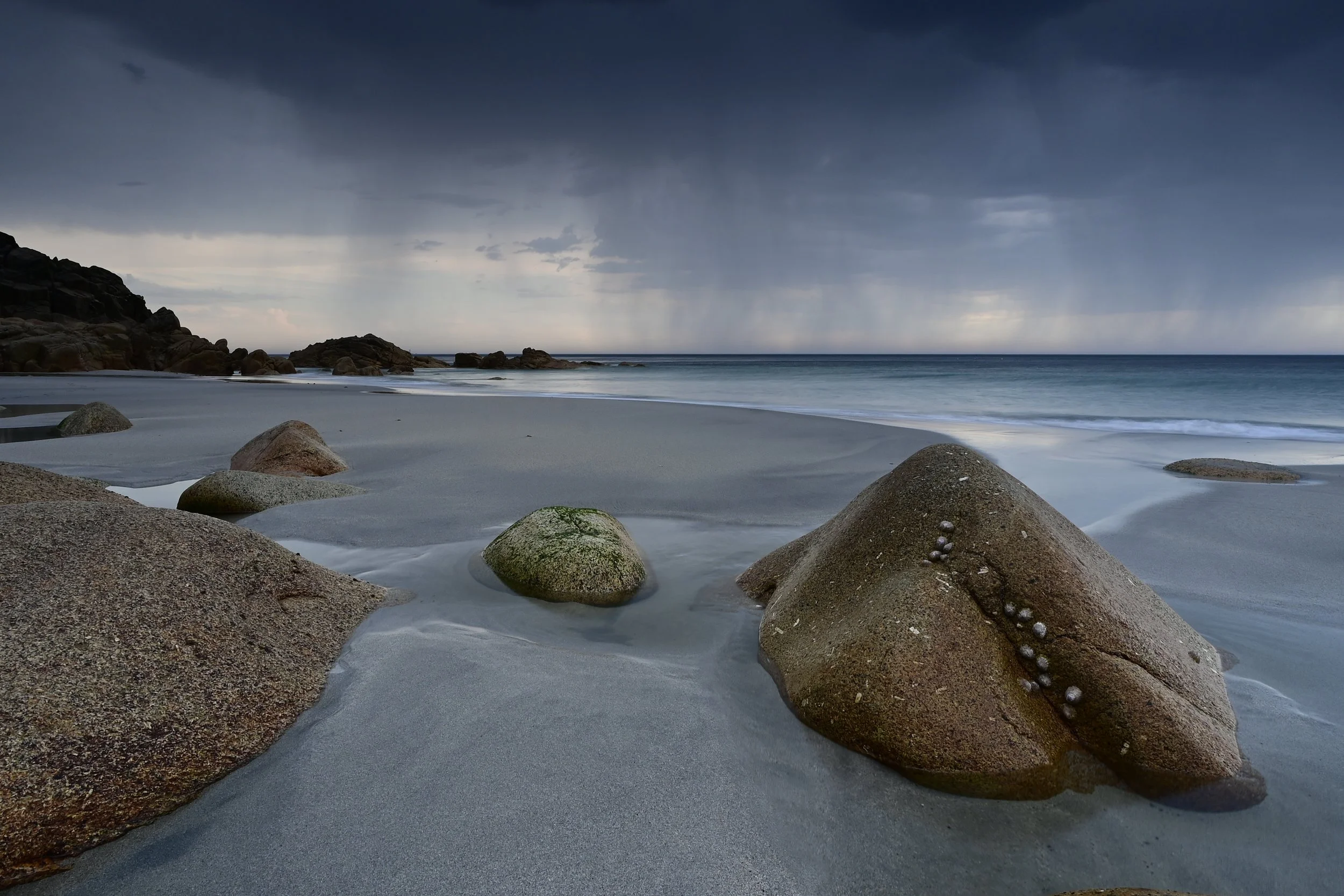
At first, the clouds added atmosphere. The stormier sky gave the images more weight, especially against the rocks and the darker tones of the beach. I managed to capture a few photographs using the rocks in the foreground with the rain clouds building in the background.
They were not quite the small, intimate compositions I had originally imagined, but they still carried the feeling of the evening. The rocks, the low tide, the incoming weather — it all started to work together.
Then the rain arrived properly.
At that point, the careful, slow photography plan became less romantic and more “grab the gear and get back to the car before everything gets soaked.”
So that is exactly what I did.
Getting Wet, Waiting It Out
There is always a slightly ridiculous moment in landscape photography where you realise you have been trying to create something calm and thoughtful, only to end up half-running back to the car in the rain with a camera bag and tripod.
This was one of those moments.
I dashed back to the car and waited for the weather to pass, hoping there might be another window of light. But the visit had already changed direction. The shoot had been cut short, and the calm, detailed study of Cot Valley I had planned became a much quicker and moodier evening than expected.
Still, I came away with images I like.
One has a strong foreground with green mossy rock leading into the beach and sea beyond. The other feels darker and more atmospheric, with the storm clouds giving the scene a heavier mood. I like them both for different reasons.
They may not be exactly what I had set out to capture, but they do reflect the evening honestly.
What Cot Valley Taught Me Again
This visit reminded me that Cot Valley is not difficult because it lacks photographs.
It is difficult because it has too many.
The bigger coastal scenes are easier to recognise. They announce themselves. Smaller compositions need more time, more discipline and more patience. You have to slow down enough to notice them, then be ruthless enough to simplify them.
That is something I am still working on.
The storm interrupted the evening before I could properly explore everything I had planned, but perhaps that made the shoot more interesting. Conditions changed quickly, and I had to respond to what was happening rather than forcing the original idea.
That is often where landscape photography becomes more honest.
You arrive with a plan. The coast has its own.
Final Thoughts
Cot Valley is beautiful, but that beauty can be distracting.
It is tempting to try and photograph all of it — the beach, the rocks, the cliffs, the sea, the sky. But sometimes the better image is smaller. Quieter. Less obvious.
This trip did not go exactly as planned, but it did give me something useful: a reminder to look closer, simplify the frame, and not be put off when the conditions change.
I will definitely return to Cot Valley again, because I still feel there are images there that I have not quite found yet.
A few of the photographs from this visit may also make their way into the Cot Valley collection in the 4hotographix store. If they do, they will be there not because the evening was perfect, but because it was real: low tide, changing light, storm clouds, and a slightly damp photographer making a quick retreat back to the car.
The full video from this trip will also be available on my YouTube channel, where I talk through the challenge of photographing the smaller details at Cot Valley — and how the storm cut the shoot short.